
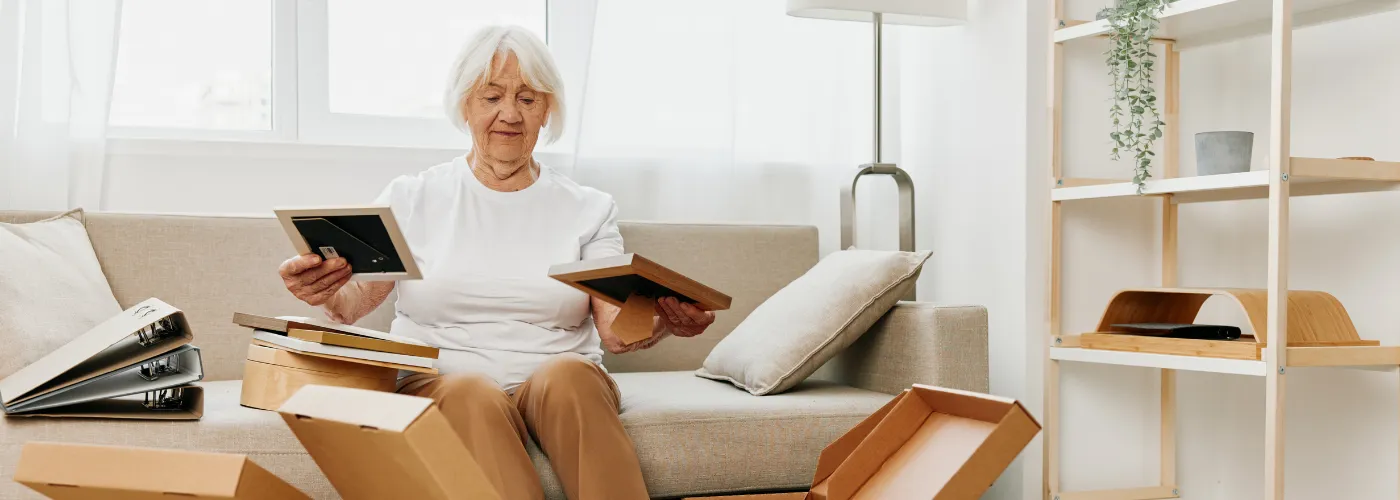
Leaving the family home can feel like much more than a physical move. It may be the place where you brought brand-new babies home, watched them grow and experienced years of celebrations, commiserations and ordinary family life.
But at what point does the emotional connection to a house begin to come at the expense of an older person’s wellbeing?
Eventually, it may become clear that the season for your family to enjoy the security of that home has passed. It’s time to pass the property baton to another whānau and allow them to flourish under its roof.
The question is: how do you even begin the process, emotionally or physically, without being buried beneath a mountain of once-loved possessions?
Start the conversation early
Robyn from Transition Navigators, an organisation that helps older people find accommodation suited to their needs, says it’s important not to underestimate how long it can take to talk through the options and arrive at the right decision.
Ideally, these conversations should begin while you’re still in your late 50s or early 60s – well before a health concern or unexpected event forces a rushed decision.
Everyone’s Plan A is usually the best-case scenario: remaining happily and independently at home for as long as possible. Unfortunately, life doesn’t always stick to the plan. Plan B means considering the practical realities, exploring the alternatives and saving towards an outcome that will work if circumstances change.
Think of it this way: we put plenty of thought into helping children transition from preschool to primary school, then on to secondary school and further study or work. Yet there is often very little transition planning or support available at the other end of life.
Do your sums
Remaining in your own home may appear to be the least expensive option, particularly if the mortgage has been paid off. However, it’s important to include rates, insurance, gardening, repairs and ongoing maintenance in your calculations.
That guttering won’t clean itself, and hot-water cylinders seem to possess an uncanny ability to give up at the least convenient moment.
Retirement village living comes with its own costs and agreements, but it may make household expenses more predictable. Depending on the village, weekly fees can cover items such as rates, water, building insurance, garden maintenance, shared amenities and village-run activities.
For some people, removing that never-ending household to-do list provides a greater feeling of independence than remaining in the family home. Imagine simply calling the maintenance team when a light bulb needs changing, rather than balancing precariously on a dining chair yourself.
Compare the total costs of each option carefully and seek independent legal and financial advice before signing a retirement village agreement.
Let the professionals help
If the process feels overwhelming, there are professionals who specialise in helping older people and their families navigate it.
An independent person isn’t emotionally connected to your home or possessions, so they can view the situation from a fresh angle and offer practical, impartial guidance.
Transition Navigators: Robyn helps older people and their families make informed decisions about where and how to live. This may involve downsizing, arranging support to remain at home or helping a family respond when a health crisis brings an unexpected change in circumstances.
Robyn researches the available options and supports families through the decision-making process. She also has a PhD focused on the wellbeing of independently living older people, including those living in retirement villages and in the wider community.
Neat Spaces: As a professional organiser, Helen works alongside older people to declutter, create order and manage major life transitions. Her services include storage solutions, paper management, sustainable household systems, creating more usable spaces and deceased-estate assistance.
Think of her as your own private Marie Kondo – but with a relatable, practical touch.
Tackle the dreaded sorting out
Downsizing a family home full of memories can feel like a monstrous task. How do you decide what to keep, donate, sell or give away? More importantly, how do you let go of an object without feeling as though you’re also discarding the memories attached to it?
Once again, the answer is to allow plenty of time.
Begin with one cupboard, room or category rather than attempting to conquer the entire house in one heroic weekend. Ask your children or loved ones which belongings are meaningful to them and consider passing those things on now.
Possessions inherited from previous generations can carry a heavy mantle of responsibility. But if you don’t want an item and your children don’t want it either, it may be time to let it go.
You could even try the Marie Kondo approach: hold the item, acknowledge its usefulness or meaning, and then release it. It might feel slightly silly at first, but giving yourself a moment to say goodbye can make the process easier.
If you’re helping an older parent, be patient and listen to the stories attached to their belongings – even if you’ve heard them plenty of times before.
Helen likens decluttering to peeling an onion: you work through it one layer at a time. Letting go of the possession doesn’t mean letting go of the memory.
Have you heard of Swedish Death Cleaning?
Once again, the Swedish have found a fabulous way to do something boring better than almost anyone else on the planet. Heck, they probably look gloriously tanned, blonde and beautiful while doing it too.
Swedish Death Cleaning, or döstädning, is the practice of gradually getting rid of possessions you no longer need, so somebody else doesn’t have to deal with everything after you pop your Crocs.
The idea was popularised by Swedish author Margareta Magnusson in her book The Gentle Art of Swedish Death Cleaning: How to Free Yourself and Your Family from a Lifetime of Clutter.
Despite its rather grim title, the method is intended to be thoughtful and uplifting. It encourages you to reflect on what has brought meaning to your life, keep what remains useful or precious and make your own decisions about everything else.
After all, wouldn’t you rather decide where your belongings go than leave someone else to biff the lot into a skip?
Could you stay put?
Moving isn’t the only option. It may be possible to remain at home for longer with some additional support.
A Needs Assessment and Service Coordination assessment, commonly known as a NASC assessment, can identify the support you need and whether you may qualify for publicly funded assistance. Your GP or another health professional can refer you, or you or a family member can contact your local NASC service directly.
Depending on your circumstances, support may include:
• Personal care, such as showering, dressing and managing medication
• Equipment or modifications to make your home safer
• Household help, including cleaning or meal preparation
• Support or respite for a family member or other regular carer
Providers such as Access Community Health and HealthCare New Zealand offer support around the country, while Nurse Maude provides services in Canterbury.
Choosing the right place
If moving to a retirement village is the right option, don’t base your decision on the glossy brochure alone.
Consider the location, facilities, weekly fees, social opportunities and whether different levels of care are available if your needs change. Having friends already living in a village can be reassuring, but it’s still important to make sure the village suits your own lifestyle and budget.
AgedAdvisor.nz allows you to search and compare retirement villages and care facilities throughout New Zealand, with reviews from residents, families, visitors and staff. Reading about real experiences can provide a useful counterbalance to village marketing.
Once you’re happily settled, consider paying it forward by leaving a review of your own.
Give yourself time
Be kind to yourself while making these decisions. Leaving a long-time home can bring genuine grief, even when moving is your own choice.
At the same time, consider how remaining in an unsuitable home could affect your safety, independence and the wellbeing of those who care about you.
Start the conversations early, investigate every option and tackle the clutter gradually. At the very least, a little Swedish Death Cleaning could reduce the trip hazards and make your home feel calmer.
With enough time, empathy and practical support, you can move into the next season feeling sorted, tidy and ready for a fresh chapter.


